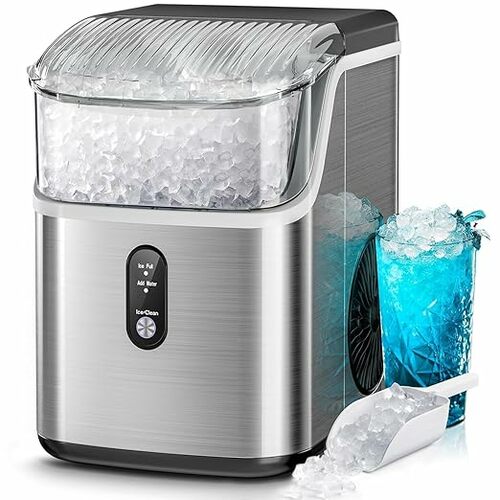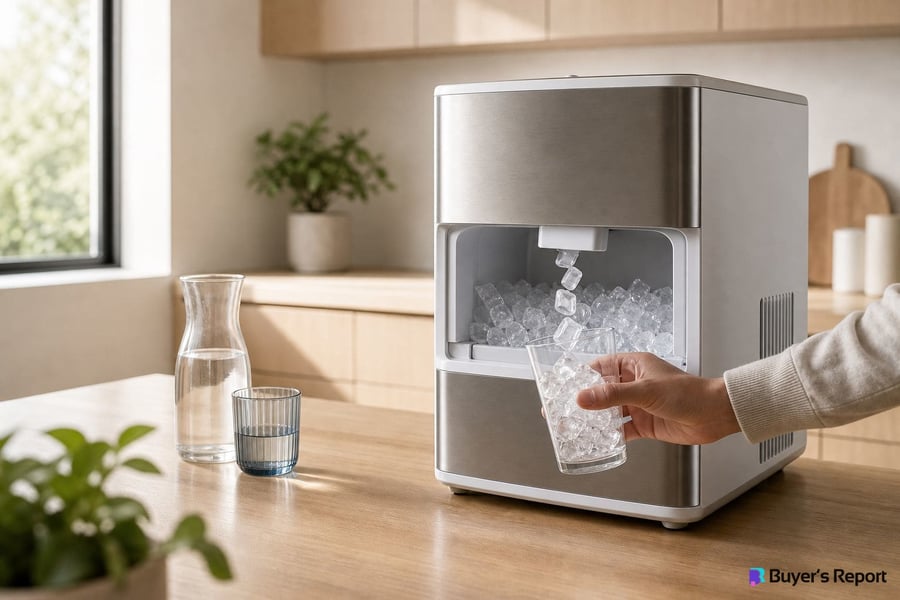
Whether you're hosting summer gatherings, stocking a home bar, or running a small café, relying on your refrigerator's built-in ice dispenser often means running short at the worst possible moment. A dedicated ice maker solves that problem by producing a steady, predictable supply of ice on demand — but choosing the right one means matching daily output, ice shape, and installation requirements to how you'll actually use it. This guide walks you through the key decisions: how much ice you need, which format fits your space, and what to look for on the spec sheet before you buy.
Who Is an Ice Maker For?
Ice makers aren't a one-size-fits-all appliance. The right model depends heavily on your volume needs, available space, and how much installation work you're willing to take on. If you fall into any of the categories below, a dedicated ice maker is likely worth the investment.
- Home entertainers and hosts. If you regularly throw parties or holiday gatherings, a countertop or undercounter unit gives you a reliable reserve without constantly refilling trays or running to the store for bags of ice.
- Cocktail and home bar enthusiasts. Certain drinks call for specific ice shapes — large clear cubes for whiskey, nugget ice for blended drinks. If ice quality and presentation matter to you, a shape-specific machine is worth considering.
- Families wanting countertop convenience. A compact, self-contained countertop model requires no plumbing and starts producing ice within minutes, making it an easy upgrade for everyday household use.
- Small business owners. Cafés, offices, and light food-service operations typically need high daily output and should look at commercial-grade or modular machines. Keep in mind these aren't plug-and-play replacements for residential units — they carry different electrical and plumbing requirements that need to be planned for.
- Kitchen remodelers. If you're building out or renovating, an undercounter built-in unit integrates cleanly into cabinetry and delivers performance a countertop model can't match.
Types of Ice Makers
The ice maker category spans everything from a compact appliance you set on a countertop to a full commercial machine that produces hundreds of pounds a day. Understanding the main formats helps you rule out what won't work before you start comparing specs.
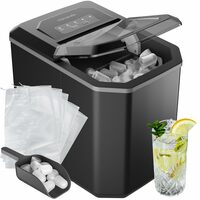
- Countertop / portable. Self-contained units that sit on a counter, fill from a manual reservoir, and require no plumbing. They're the easiest entry point — plug them in and they're producing ice in under 15 minutes. Output is modest, typically 20–35 lbs per day, which suits households and light entertaining.
- Undercounter built-in. Designed to fit beneath a standard countertop in a cabinet space, these units almost always require a direct water line and a drain. They produce significantly more ice than countertop models, run quietly, and look intentional in a finished kitchen or bar setup.
- Freestanding / modular. Larger, standalone machines that pair with a separate storage bin. Common in food-service settings and capable of the highest daily output. They require dedicated plumbing and often a specific electrical circuit.
- Nugget / pellet ice makers. Nugget ice — soft, chewable, and highly absorbent — has a devoted following for iced coffee drinks and fountain-style beverages. These machines come in both countertop and undercounter formats and carry a price premium over standard bullet-ice machines.
- Clear cube ice makers. Produce slow-frozen, crystal-clear cubes prized in upscale cocktail service. They're typically more expensive and slower to produce ice than standard machines, but the visual and melt-rate difference is meaningful if presentation matters to you.
- Ice and water dispensers. Combine filtered water dispensing with ice production in one unit, common in office and break-room settings. Convenience is the primary appeal; production capacity is usually mid-range.
Matching Capacity to Your Actual Needs
Daily ice production is the single most important number on the spec sheet, and it's easy to get wrong. Output figures are measured under ideal lab conditions, and real-world production shifts with ambient room temperature and incoming water temperature — so treat advertised numbers as a ceiling rather than a number you can count on hitting every day.
- Casual household use. A family using ice for drinks and the occasional get-together rarely needs more than 20–30 lbs per day. A quality countertop model covers this comfortably.
- Regular entertaining. If you host frequently or run a home bar, aim for 50 lbs or more of daily production with a storage bin capacity of at least 25 lbs so ice is available on demand rather than just as it's made.
- Small business or office. Light commercial settings generally need 100–300 lbs per day depending on drink volume and peak hours. At this level, you're looking at undercounter or modular machines designed for sustained output.
- Storage bin sizing. Production capacity and bin capacity are different numbers — don't confuse them. A machine that makes 50 lbs of ice a day but only stores 15 lbs will require frequent clearing to keep up with demand.
Plumbing and Installation Requirements
Installation format is often the deciding factor between models, and it's worth thinking through before you fall in love with a unit that won't work in your space. Verify drainage requirements before purchase, since some installations may require professional plumbing work.
- Reservoir / self-contained. You fill a built-in water tank manually. No plumbing required — just a standard outlet. Ideal for renters, countertop setups, or any location without nearby water access. The tradeoff is that you need to refill the tank regularly and output capacity is limited.
- Direct plumb-in. The unit connects to your home's water supply line for continuous, hands-off operation. Standard for undercounter and modular machines. Follow all manufacturer installation guidelines, especially for plumbing and electrical connections, and budget for professional installation if you're not experienced with water line work.
- Drain requirements. Most undercounter and commercial units need a gravity or pump drain to remove meltwater. Some countertop models are drainless — meltwater recirculates back into the reservoir. If you're considering a drainless unit, think about how that affects water quality over time, particularly in hard-water areas.
Key Features to Look For
Once you've narrowed down format, capacity, and installation type, these features separate well-designed machines from frustrating ones — and many of them are worth verifying on the spec sheet before you buy.
- Safety certifications. Look for recognized safety certifications such as UL and NSF before purchasing. UL covers electrical safety; NSF certification indicates the unit meets food-equipment sanitation standards, which matters when ice will be consumed.
- Self-cleaning mode. Look for a built-in cleaning or descaling cycle. Regular cleaning and descaling are essential to safe, hygienic ice production, and a machine that makes the process straightforward is far easier to live with long-term. Check how the cycle works and what cleaning solution the manufacturer recommends.
- Water filtration. Some models include a built-in filter; others have a filter port for an aftermarket option. Local water quality is worth considering before you buy — hard water and mineral buildup affect performance and longevity, and a filtration option can meaningfully extend the machine's useful life. Note that a built-in filter on its own doesn't make ice or water "purified" unless the unit pairs with a certified filtration system rated for that purpose.
- Noise level. Countertop machines can be noticeable in an open kitchen or quiet office. Check the decibel rating if noise is a concern — anything under 45 dB is generally unobtrusive in daily use.
- Ice shape options. Some machines offer multiple ice sizes or shapes via a settings toggle. If you have varied use cases — cocktails one night, water pitchers the next — this flexibility is worth prioritizing.
- Energy Star certification. Ice makers run continuously, so efficiency matters for long-term operating cost. An Energy Star–rated model can reduce electricity consumption meaningfully compared to uncertified alternatives.
Bottom Line
The best ice maker is the one that fits your actual daily demand, slides into your available space, and matches the plumbing reality of where you plan to put it. Start with capacity and installation format — everything else is secondary. Prioritize safety certifications, take the maintenance requirements seriously, and don't overlook water quality in your area, since it has a real impact on how the machine performs over time. Get those fundamentals right, and you'll have an appliance that earns its counter or cabinet space every day.

 Kismile
 Antarctic Star
 hOmeLabs